
Renter-Friendly Floating Shelves (No Drilling): What Actually Stays Up
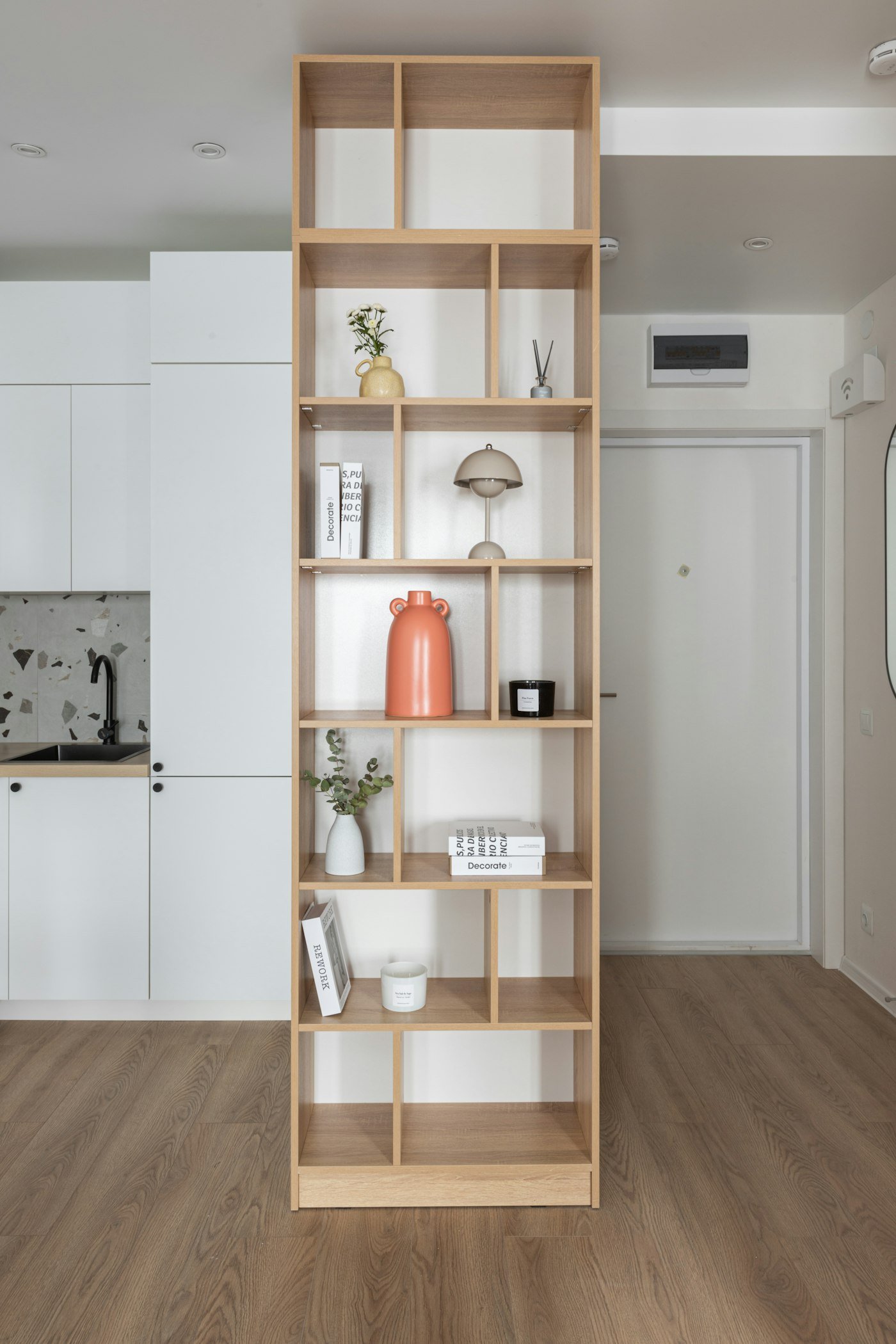
TL;DR: Most no-drill shelves rely on strong adhesive or tension. They work — but only on the right surface with the right prep. Here’s what to check before you buy, and the three systems that actually hold.
Why no-drill shelves are a gamble
Walk into any apartment and you’ll see the same thing: leaning tower of books on the floor, floating shelf on the wall that fell off in week three, and a patch of missing paint where it used to be.
No-drill shelves fail for predictable reasons:
- Wrong surface (textured wallpaper, popcorn walls, fresh paint)
- Wrong prep (dust, grease, moisture)
- Overloading (treating a 10-lb-rated shelf like a bookshelf)
- Wrong temperature (bathroom humidity kills adhesive)
The good news: if you match the system to your wall, no-drill shelves can hold surprising weight — and come off clean at move-out.
The three systems that actually work
1. Adhesive strips + shelf brackets (best for smooth, painted drywall)
What it is: Command-style picture hanging strips (rated 4–16 lbs per pair) used with small floating shelf brackets or strip-compatible shelves.
How to install correctly:
- Clean the wall with rubbing alcohol and let it dry completely (30 min)
- Mark level with a spirit level — crooked is the #1 giveaway of a rental install
- Press strips firmly for 30 seconds each
- Wait 1 hour before loading weight
Weight reality: rated for 8–16 lbs per pair. That’s decor, small plants, toiletries. NOT books.
Removal: pull the tab straight down, slowly. If it leaves residue, use rubbing alcohol — not a scraper.
2. Tension pole shelves (best for alcoves and closets)
What it is: a spring-loaded pole that wedges floor-to-ceiling, with shelves attached.
Why renters love it: zero wall contact. No adhesive, no holes, no residue. Just pressure.
Critical checks:
- Measure floor-to-ceiling height BEFORE buying (many max out at 9 ft)
- Pole must sit on a solid floor, not carpet (carpet compresses = shelves slide)
- Check for wobble weekly — spring tension relaxes
Weight reality: surprisingly strong — a well-seated tension system holds 30–60 lbs spread across shelves.
Removal: loosen the spring, lift out. Done. Zero damage.
3. Over-door shelves (best for bathroom and bedroom doors)
What it is: a hanging organizer that hooks over the top of the door.
What to check:
- Door gap at top must be ≥ 1/8″ — test with a credit card before buying
- Hooks should be rubber-lined (protects paint)
- Never exceed the door’s weight rating — hollow-core doors are weak
Weight reality: 20–40 lbs depending on model, but distribute weight evenly.
Where no-drill shelves FAIL (avoid these)
| Surface | Verdict | Why |
|---|---|---|
| Textured wallpaper | ❌ Avoid | Adhesive grabs texture, not wall — pulls off in weeks |
| Freshly painted walls (< 4 weeks) | ⚠️ Risky | Paint hasn’t cured; strips take paint with them |
| Bathroom (direct shower steam) | ⚠️ Short lifespan | Humidity breaks down adhesive |
| Popcorn/knockdown texture | ❌ Avoid | No clean contact surface |
| Wallpaper (any) | ❌ Avoid | Removal pulls the paper |
How to choose (30-second decision)
| Your wall | Best system |
|---|---|
| Smooth, painted drywall | Adhesive strips + shelf |
| Alcove or closet | Tension pole shelves |
| Hollow door | Over-door organizer |
| Textured wall | Skip shelf — use floor-standing ladder shelf |
| Renter-proof backup plan | Floor-standing shelf, always |
Renter safety note
- Never use no-drill shelves above beds, couches, or cribs for anything heavier than a photo frame
- Check your lease: some buildings ban adhesive-backed anything
- If the wall is your responsibility to repaint, weigh the risk — a shelf that falls and damages the floor costs more than a drill hole
- When in doubt: floor-standing furniture is the only truly zero-risk option
My honest verdict
For a first rental shelf, start with tension pole shelves in a closet — zero risk, zero residue. Then graduate to adhesive-bracket shelves on one smooth wall you’ve tested. Skip no-drill entirely if your walls are textured.
Cost: $15–60 · Difficulty: easy · Reversibility: perfect (if surface matches)
Related reads
- [Under-sink organization around pipes](/under-sink-organization-around-pipes/)
- [Small apartment entryway shoe storage](/small-apartment-entryway-shoe-storage/)
- [Removing command strips without peeling paint](/removing-command-strips-without-peeling-paint/)
Top Picks on Amazon
Here are some of the most popular options on Amazon for this type of product. Prices and availability change often — tap to check current listings.
Floating-shelf decision notes
A shelf that looks floating still transfers load into its mounting system and the surface behind it. Before installing, measure the item depth, expected load, wall texture, and the force created when someone reaches for an object at the front edge. Freestanding ladder shelves or narrow bookcases are safer when the wall is uncertain or the objects are valuable. If an adhesive shelf shifts, unload it immediately rather than adding another strip and hoping the wall will hold.
- Keep the load well below the stated maximum.
- Place light, stable objects near the wall.
- Avoid valuable or breakable items above seating.
- Inspect for tilt, creep, and paint movement.
Before choosing a floating-shelf alternative, ask what would happen if the wall could not safely carry the load. A narrow freestanding shelf, picture ledge, or cabinet may use a little more floor space but gives you a clearer inspection and removal path. For a rental, the best shelf is the one you can unload quickly, explain to a landlord, and restore without turning a small decorating project into structural repair.

2 Comments