Small Apartment Kitchen Storage Solutions (No Pantry, No Problem)
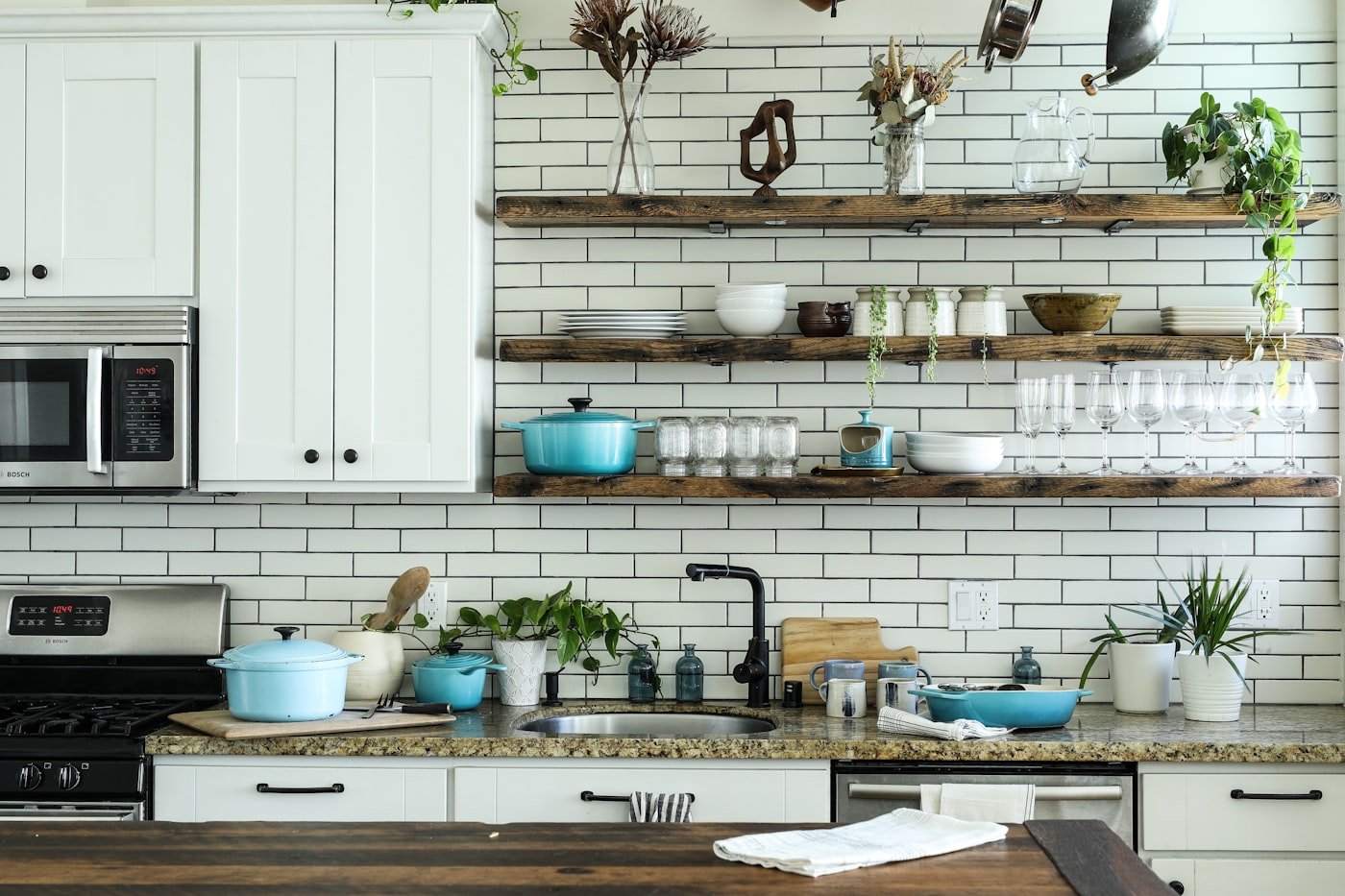
TL;DR: The “no pantry” problem isn’t a space problem — it’s a layout problem. Here’s the exact system: use the kitchen’s vertical dead space, make the cabinet doors work, and put a rolling cart where a pantry would go.
The no-pantry kitchen, decoded
Apartments skip pantries because they save builders money. Your kitchen then inherits three problems:
- No bulk storage — where do the cans, pasta, and rice live?
- No counter space — every appliance competes for the same 24 inches
- Cabinets that are 90% wasted space — deep, dark, and unreachable
The fix isn’t buying more stuff. It’s using the space you have in a smarter order:
- Cabinet doors (free real estate)
- Vertical space (the wall between counter and cabinet)
- Rolling carts (portable pantry)
- Inside the cabinets (organizers that actually fit)
Priority 1: The cabinet doors (free real estate everyone ignores)
The inside of cabinet doors is prime storage — flat, dry, and unused.
- Door racks (spice racks, cup racks, lid holders) — $8–15, no drilling, screw-free
- Under-sink door rack for sponges and gloves — keeps them off the counter
- Paper towel holder on the inside of a cabinet door — keeps the counter clear
Warning: check the door swings fully (a rack on the door that hits the cabinet frame = broken rack within a week). And never put heavy items on door racks — the hinges aren’t rated for it.
Priority 2: The vertical gap (counter to cabinet)
The 15–18″ of wall between your counter and upper cabinets is dead space in most kitchens. Fixes:
- Under-cabinet tension rod + S-hooks — hang mugs, measuring cups, and utensils. Zero holes.
- Magnetic knife strip (if you have a steel backsplash or can use a strong magnet bar on the range hood) — check it’s allowed; magnets are renter-safe only on metal surfaces
- Under-shelf baskets — clip onto the shelf above, hang below. Doubles shelf space instantly.
Priority 3: The rolling cart (your portable pantry)
The single best purchase for a no-pantry kitchen:
- Width: must fit through your kitchen doorway (measure it!)
- Depth: ≤ 16″ so it doesn’t block traffic
- Wheels: lockable on at least 2 wheels
- What goes in it: bulk food, small appliances you use weekly, or the overflow from cabinets
Why rolling beats fixed: you can wheel it into the living room during cooking, tuck it in a corner when guests come, and it moves with you.
Priority 4: Inside the cabinets (fix the three classic wastes)
The deep cabinet (your #1 problem)
Deep cabinets eat small items. Fix:
- Tiered shelf risers — cans and jars stop hiding behind each other
- Lazy Susan for the corner cabinet — the corner is the most wasted 2 sq ft in the kitchen
- Pull-out baskets that sit on top of each other — use the vertical space in the cabinet
The under-sink cabinet
This is NOT food storage (pipes leak, cleaning supplies live here). Use:
- Adjustable organizer that fits around the P-trap — measure pipe position first, most organizers are pipe-adjustable
- Door racks for sponges/gloves
- Keep food OUT of this cabinet entirely
The upper cabinet
- Stackable shelf risers for plates and bowls — doubles usable height
- Mug hooks under the shelf — frees a shelf row
Priority 5: Counter overflow (the appliance shuffle)
If the toaster, kettle, and coffee maker fight for space:
- Kill the unused ones — anything you use less than weekly goes in the rolling cart
- Vertical stacking — a microwave cart or shelf unit in a corner
- Over-sink drying rack — folds flat and gives you a prep surface back
Quick decision table
| Problem | Solution | Cost | Drilling? |
|---|---|---|---|
| No pantry | Rolling cart (12–16″ deep) | $25–60 | No |
| Deep dark cabinets | Shelf risers + lazy Susan | $10–30 | No |
| Under-sink chaos | Pipe-adjusted organizer | $10–25 | No |
| Counter clutter | Door racks + under-cabinet rod | $8–20 | No |
| Corner waste | Lazy Susan | $10–20 | No |
Renter safety note
- Never store food under the sink — leaks and cleaning chemicals make it a health risk
- Check the weight rating on shelf risers; don’t stack plates to the ceiling
- Tension rods in cabinets: fine, but re-tighten monthly (kitchen humidity loosens them)
- Rolling carts with food: keep them away from the stove (heat + oil + fabric bins = fire risk)
My honest verdict
Do it in this order and you’ll reclaim more space than buying any “kitchen organization system”:
- Door racks (15 min, $10)
- Shelf risers + lazy Susan (30 min, $25)
- Rolling cart ($40, the hero purchase)
Skip “complete cabinet organizer kits” — they assume a cabinet size you don’t have.
Cost: $25–80 total · Difficulty: easy · Reversibility: perfect
Related reads
- [Small apartment entryway shoe storage]()
- [Where to store suitcases in a small apartment](/where-to-store-suitcases-in-a-small-apartment/)
- [No-drill kitchen storage](/small-apartment-kitchen-storage-solutions/)
Top Picks on Amazon
Here are some of the most popular options on Amazon for this type of product. Prices and availability change often — tap to check current listings.
Small-kitchen storage decision notes
Kitchen storage works best when it follows the cooking sequence: daily ingredients and tools near the work zone, backups together, and occasional items higher or farther away. Measure cabinet door swings, counter depth, appliance heat, and the clearance needed to open drawers. Do not turn the top of a refrigerator, a vent, or a narrow walkway into a heavy storage shelf without checking the manufacturer and lease constraints. A rolling cart can add capacity, but only if it can move without blocking the cooking path.
- Keep a clear prep surface.
- Use vertical space for light items.
- Group backups and label them.
- Leave access to shutoffs and appliances.